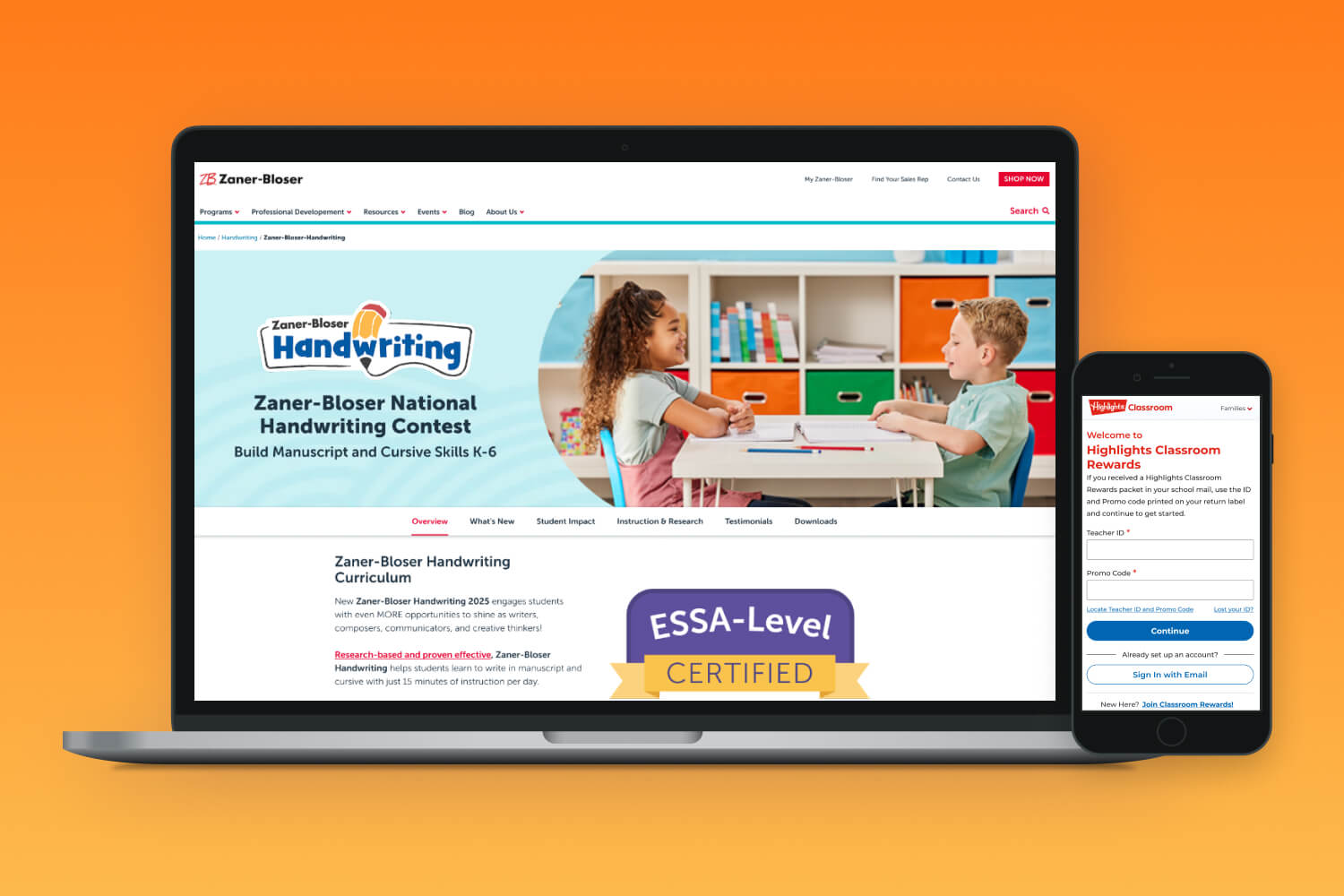
Lead UX Designer
Figma - Zeplin - Mouseflow - Qualtrix - Quantum Metric
3 months (6 sprint cycle)
The Challenge
The Highlights Classroom rewards platform let teachers earn points for collecting student magazine orders, redeemable for free classroom supplies. But authentication created significant friction: teachers needed a unique Teacher ID and a campaign‑specific promotional code, often delivered by physical mail.
Core problems:
Complex legacy database: The system centered on generated Teacher IDs with campaign‑based points tracking, limiting standard auth approaches.
Physical mail dependency: Access codes sent by mail caused delays and operational cost.
Poor user experience: Teachers struggled to find IDs and codes, driving high support volume and a 2.3/5 login satisfaction rating.
Scalability bottleneck: Campaign‑bound access limited year‑round engagement.
Technical constraints: Any shift to email + password had to reliably link new credentials to existing records without a risky database overhaul.
Critical constraint: Redesigning the database would have blown the timeline and budget and risked data integrity. The solution had to work with the existing architecture, not against it.

The Process
I led UX strategy and design under tight technical constraints, partnering closely with engineering and data from the start.
What I led:
User flow mapping and analysis
Authentication UX strategy within database constraints
Wireframing, prototyping, and high‑fidelity design using the existing design system
Mobile optimization
Cross‑functional collaboration with development and data teams
Analytics review and user research planning
How we collaborated:
Constraint‑based design: asked “what can we do?” at each phase
Frequent feasibility check‑ins with engineering and data
Iterative refinement based on technical feedback without losing UX goals
Research and analytics inputs:
Baseline metrics via Mouseflow, Qualtrix, Quantum Metric
Targeted validation with teachers to ensure an intuitive transition



The Solution
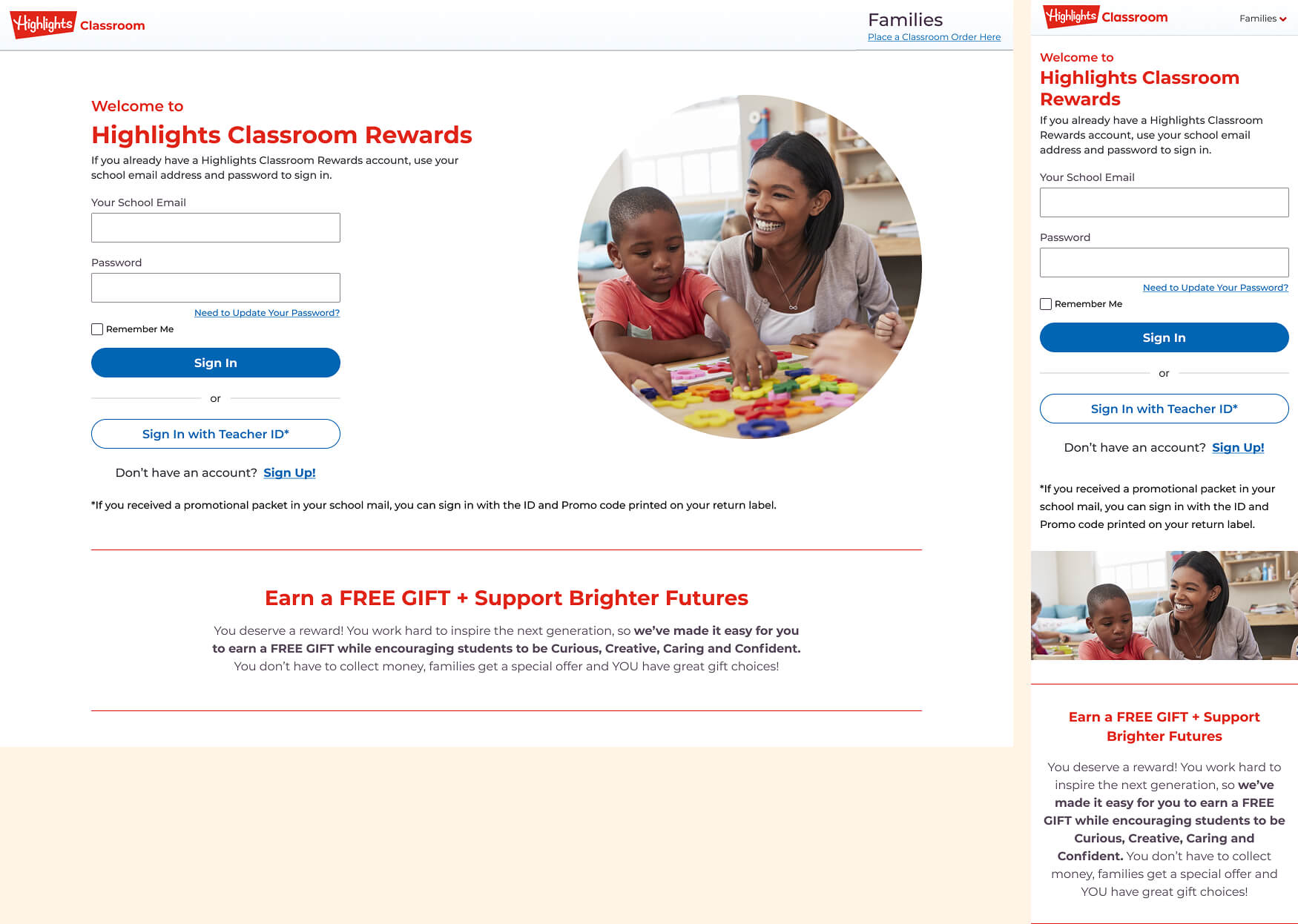
A dual‑pathway authentication model that modernized access while preserving continuity for existing users.
For existing teachers:
Log in with Teacher ID + promotional code (familiar flow)
After success, add a password to the account
Receive email confirmation for future email + password login
Subsequent logins use email + password
For new teachers:
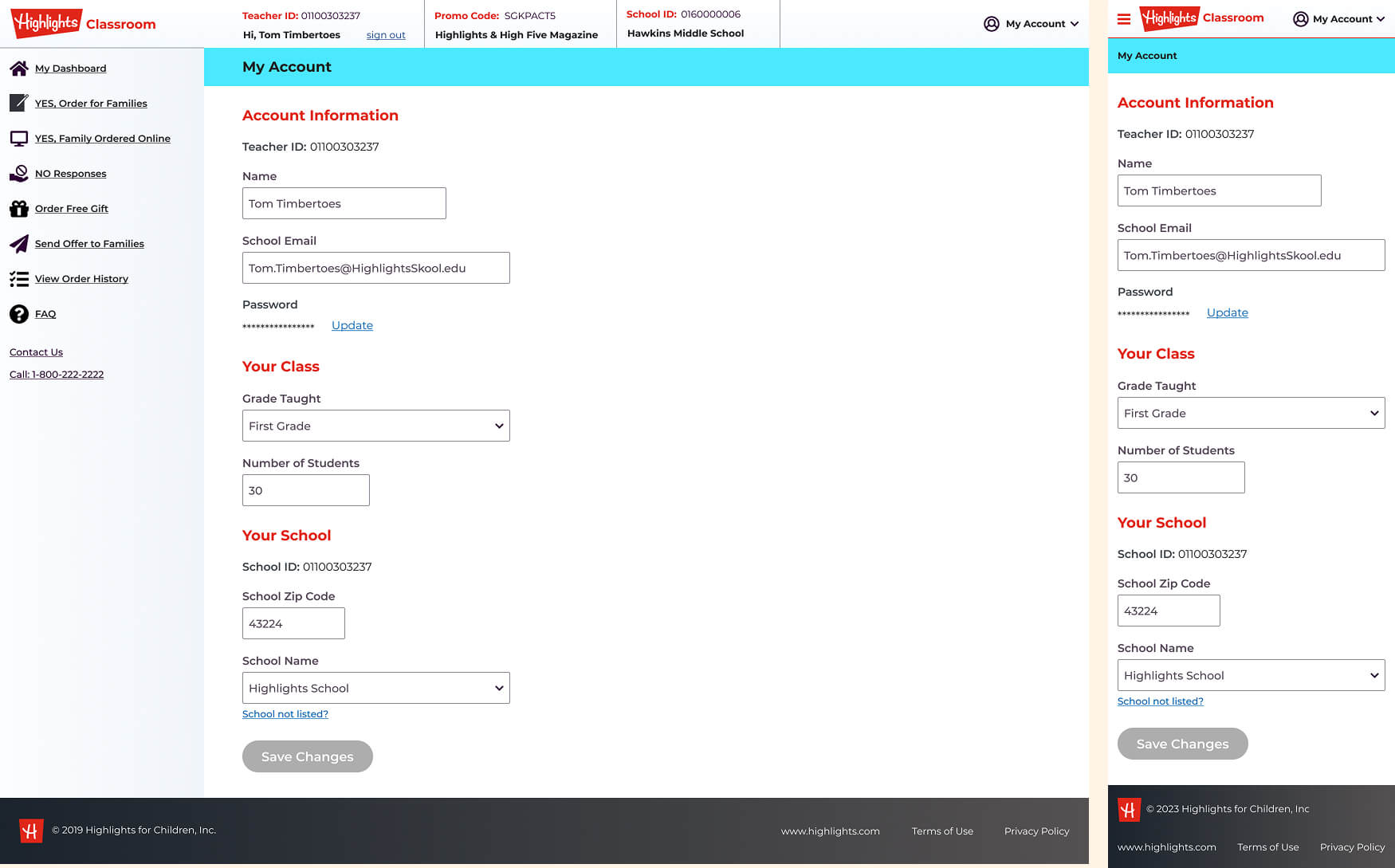
Self‑service account creation via email registration
Backend matches the new account to any existing teacher records and data
Interface design details:
Dual login options visible: Teacher ID + code and Email + password
Smart entry points for existing vs new teachers
Clear, contextual guidance explaining the transition
Mobile‑optimized screens and flows
Designed with existing UI components and patterns for speed and consistency


Measurable Outcome
UX/UI Improvements
Improved Login Success: 92% of teachers were able to login without assistance
Improved Login Satisfaction: Teacher login satisfaction improved from 2.3/5 to 4.6/5 rating
Technical Results
Migration Success: 95% of active teachers successfully transitioned to new authentication system
Data Integrity: Account information, rewards points or order history date successfully matched to user email identifier
Performance: Platform load times improved 20% through optimized interface design
Accessibility Compliance: Achieved WCAG 2.1 AA standards across all platform functions
Business Impact
Teacher Engagement: 40% increase in platform usage due to improved user experience and year-round accessibility
Customer Service Reduction: 35% decrease in support tickets related to access issues
Platform Scalability: Foundation established for additional teacher-focused features and year-round engagement
Key Learnings
Constraints aren't the enemy. Working within them delivered outsized UX gains on time and on budget.
Partnership beats perfect. Early, sustained collaboration with engineering produced a more feasible, higher‑quality result.
Incremental improvement wins. A pragmatic path doubled satisfaction without a risky rebuild.
Dual pathways reduce risk. Supporting old and new methods eased the transition for teachers.
Analytics prove the value. Clear metrics (success rate, usage, tickets) built credibility for further investment.
Strategic platform transition with compounding ROI. Moving from a promotional access model to standard authentication resolves operational inefficiencies and establishes a scalable foundation for a true digital service—improving security and user experience while enabling advanced features that drive engagement and business value.
This authentication redesign modernized a legacy system pragmatically, dramatically improving teacher experience and platform engagement while staying within strict technical and timeline constraints.