UX Lead & Strategic Advisor
Figma - PHPStorm - Docker - Zeplin
6 months
The Challenge
The CDS Global Engage platform that hosted Highlights' magazine subscription ordering was being sunset, forcing a migration decision. This created both a crisis and an opportunity: the business needed to move quickly, but could also rethink their entire e-commerce architecture.
The Core Problems:
Platform sunset: Existing Engage platform required replacement, creating urgent timeline pressure.
Multiple options: Business was considering various solutions including Shopify and other third-party platforms.
Cost concerns: Running multiple platforms was expensive and created maintenance overhead.
Functionality preservation: Existing single-page order form provided good user experience that needed to be maintained.
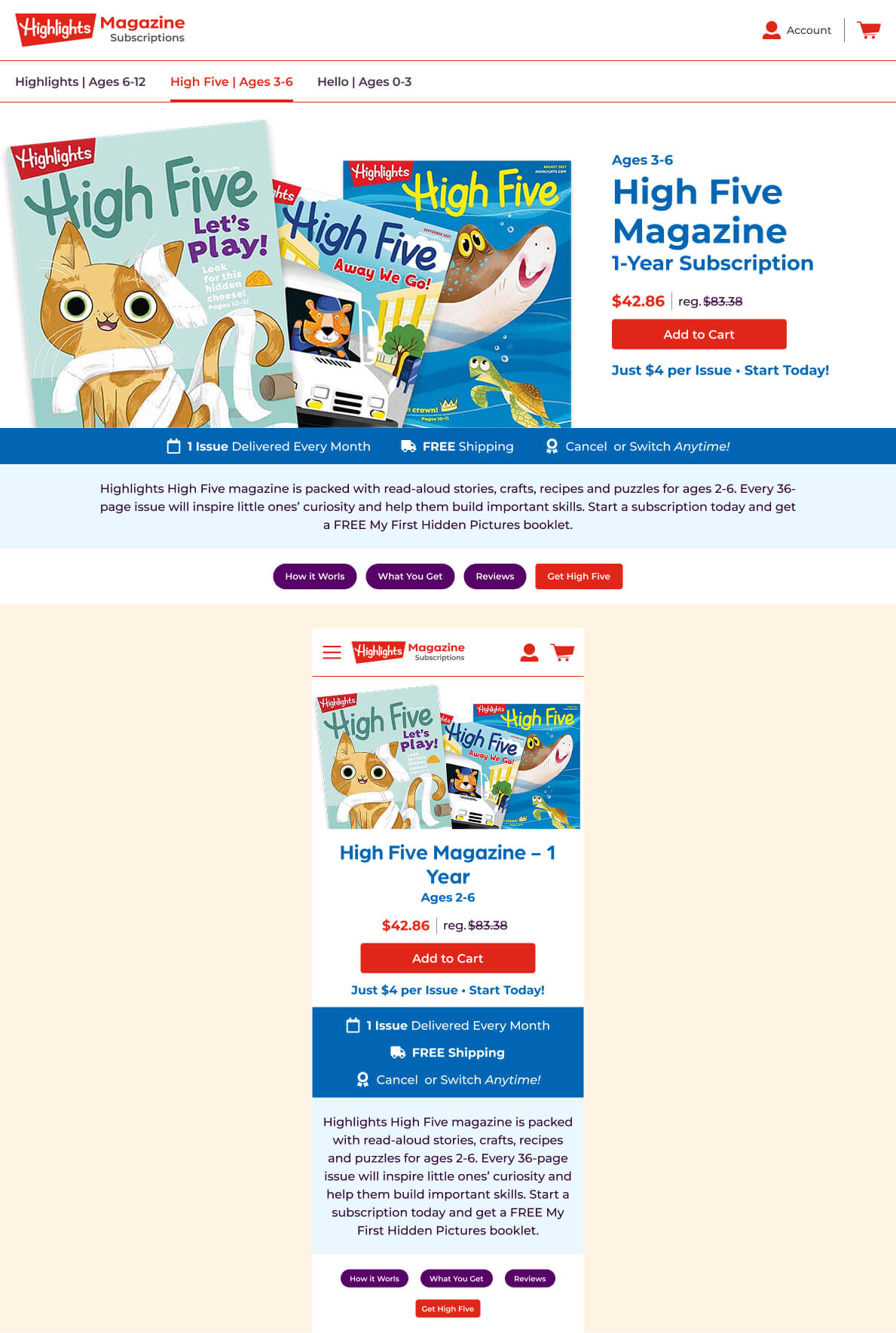
Multi-brand complexity: Three magazine brands (Highlights, High Five, Hello) each needed their own ordering experience.
Technical limitations: Adobe Commerce doesn't natively support single-page order forms like the Engage platform.
Stakeholder education gap: Business teams didn't understand Adobe Commerce multi-store capabilities or benefits.

The Process
I championed the strategic direction for this migration, advocating for Adobe Commerce multi-store consolidation over third-party solutions, then led UX strategy and design execution.
What I Led:
Strategic recommendation and business case development
Stakeholder education and alignment
Technical feasibility analysis with engineering
UX strategy and design direction
Theme architecture planning
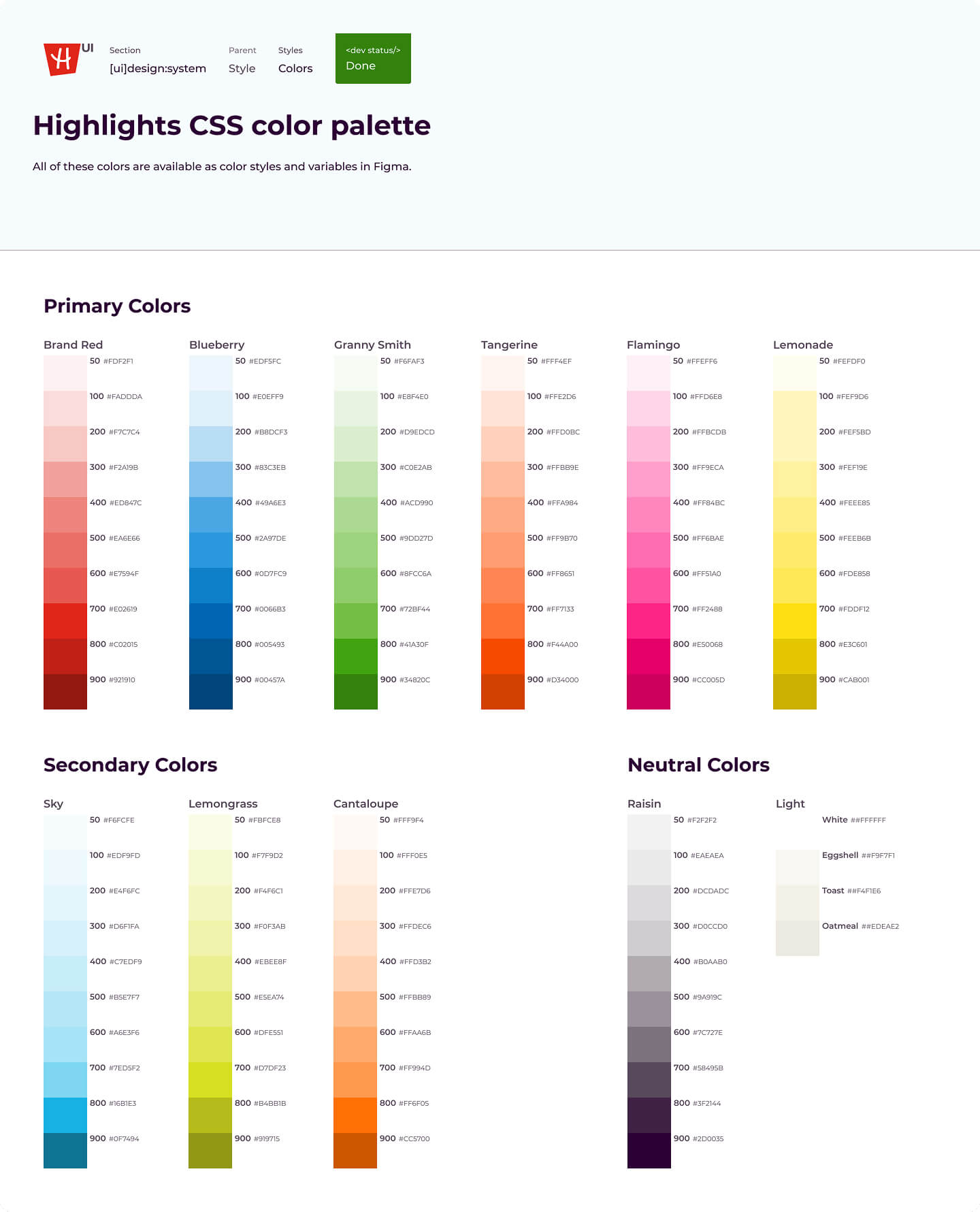
Design system standards and component reuse
UX/UI designer direction and design approval
Cross-functional collaboration and decision-making
My Approach:
Research Adobe Commerce multi-store capabilities thoroughly
Build business case for consolidation vs. third-party platforms
Educate stakeholders on technical capabilities and benefits
Navigate platform limitations through creative UX solutions
Lead decision-making conversations directly with product owners
Ensure design system consistency across all implementations
Decision Framework and Buy-in
The Alternative: The business was seriously considering platforms like Shopify for the magazine ordering — a simpler migration path that would:
Add another platform to maintain
Increase costs with additional platform fees
Create inconsistent user experiences across touchpoints
Require ongoing integration work between systems
The Case I Built: Comprehensive research on Adobe Commerce multi-store implementation showed:
Cost savings: Single platform reduces licensing, hosting, and maintenance costs.
Operational efficiency: One codebase, one design system, one team to manage.
Better user experience: Consistent experience across all Highlights digital properties.
Future scalability: Multi-store architecture could support additional stores across all marketing channels.
Technical feasibility: Despite limitations, single-page ordering could be replicated through custom development.
Navigating Pushback:
Addressed knowledge gaps on multi-store architecture
Countered concerns about Adobe Commerce limitations with specific UX solutions
Compared long-term costs of multiple platforms vs. consolidation
Led direct conversations with product owners to accelerate alignment
Collaboration and Execution Rhythm
Engineering partnership: Hands-on theme development guidance using PHPStorm and Docker. Continuous feasibility validation and joint problem-solving on Adobe Commerce limitations.
Design team direction: Clear design system standards, regular reviews, and final approvals to ensure quality and consistency.
Business alignment: Strategic guidance, expectation management, and facilitated trade-off decisions with recommendations.

The Solution
Custom Adobe Commerce Implementation
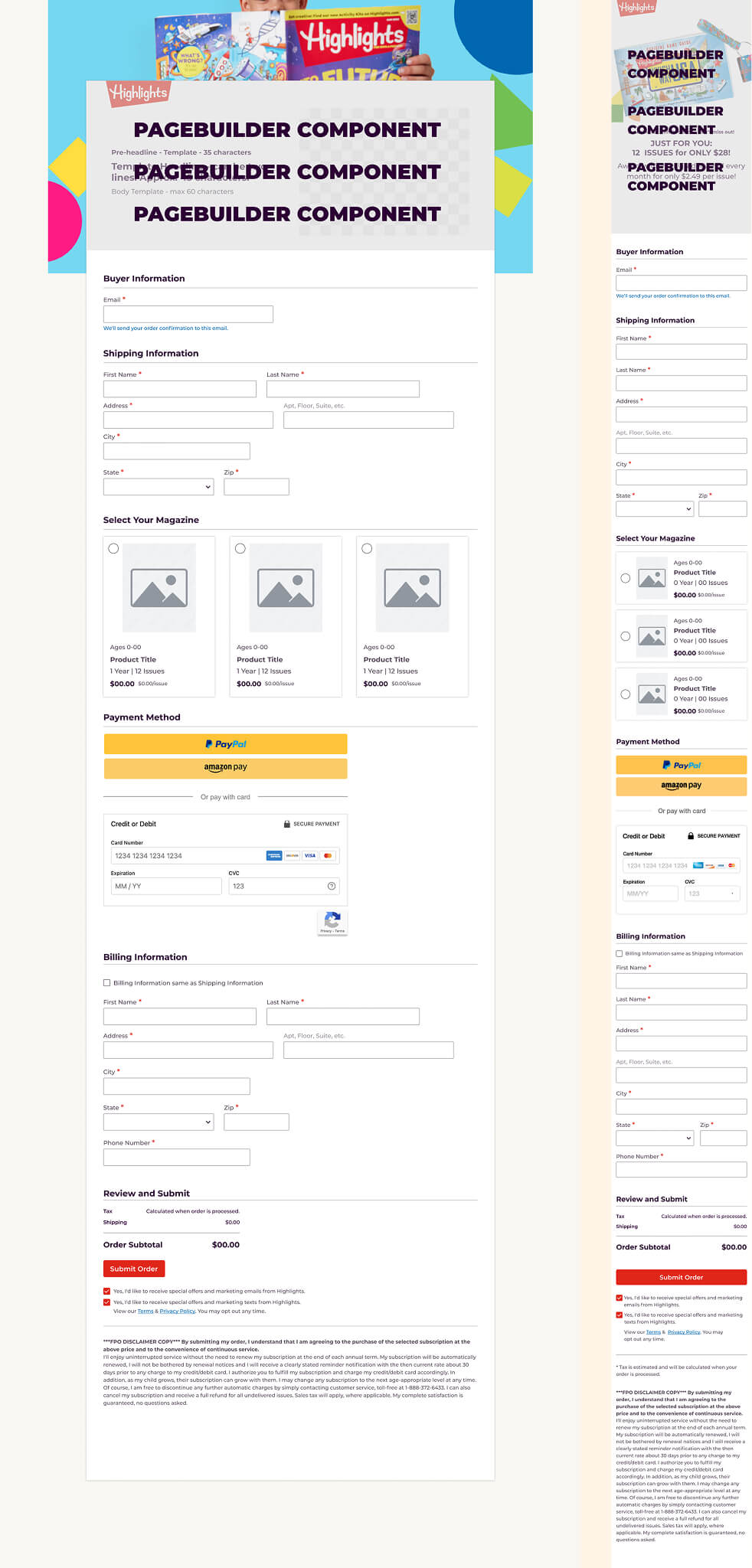
Technical feasibility analysis: Adobe Commerce doesn't natively support single-page order forms. We designed a custom implementation that replicated single-page functionality through creative use of native features.
Theme architecture strategy:
Base theme creation to establish consistency across the site
Highlights theme recreation within the new architecture
Dedicated magazine order form theme for the ordering experience
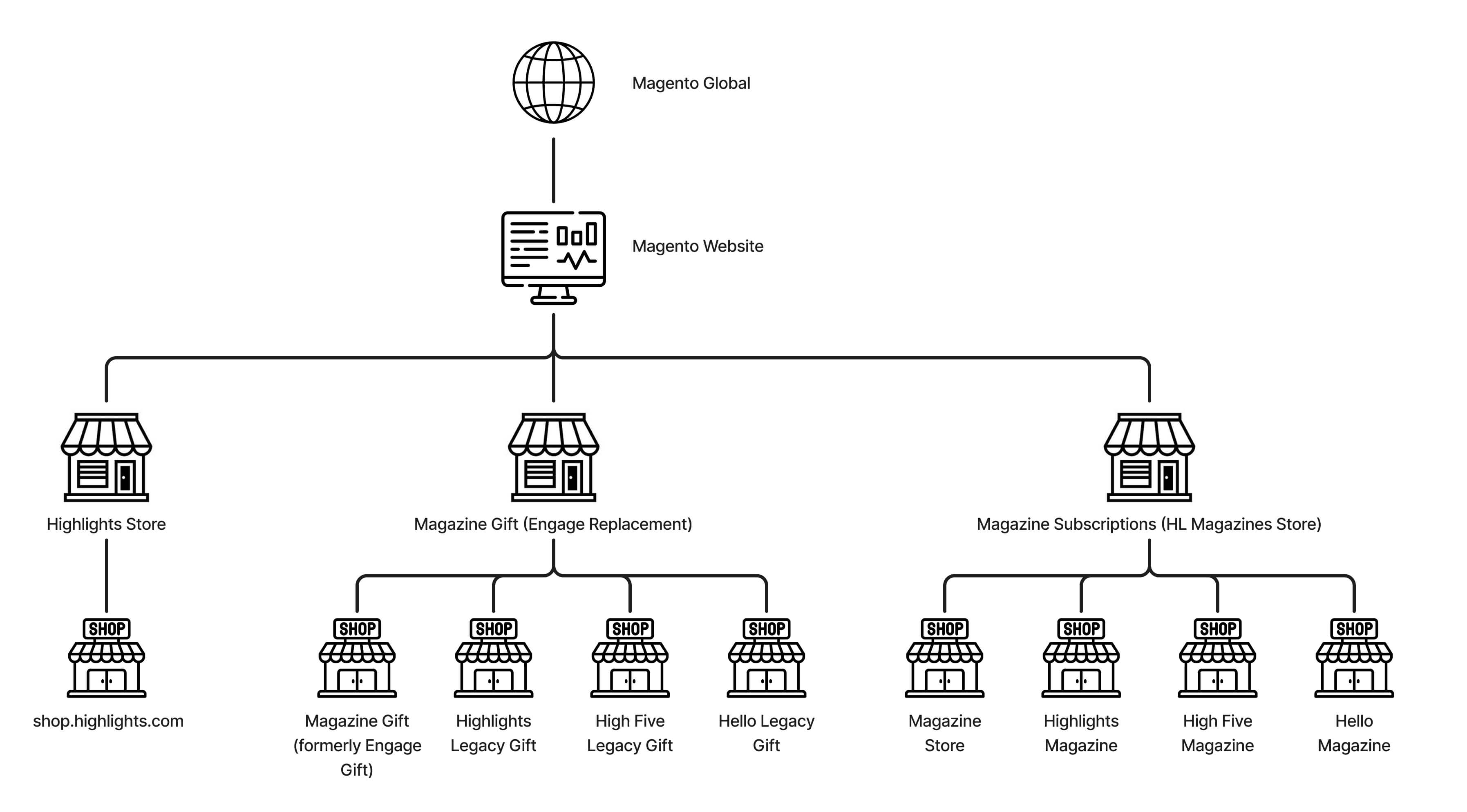
Multi-brand support for three magazine brands within one store view
Design system leadership:
Component reuse standards to maximize reuse and avoid duplicates
Consistency enforcement across all touchpoints
Final approval on all design decisions
Stakeholder management:
Defined functional requirements with product owners
Educated stakeholders on constraints and necessary adjustments
Secured buy-in for functionality adjustments required due to platform limitations


Measurable Outcomes
Successful platform migration: All three magazines (Highlights, High Five, Hello) successfully moved to Adobe Commerce before holiday gifting season.
User experience preservation: Replicated single-page order form functionality despite platform limitations, maintaining familiar experience for customers.
Cost-effective consolidation: Eliminated need for separate third-party platform (like Shopify), reducing ongoing costs and maintenance overhead.
Future-ready architecture: Multi-store foundation provides scalability for additional stores across all marketing channels.
Design system consistency: Maintained brand standards across all touchpoints through comprehensive component reuse.
On-time delivery: Launched before critical holiday season despite 6-month timeline and complex requirements.
Stakeholder alignment: Successfully secured management buy-in for strategic consolidation approach and necessary functionality adjustments.
Key Learnings
Strategic vision requires education. Business teams needed help understanding multi-store capabilities before they could make informed decisions. Taking time to educate stakeholders built trust and better outcomes.
Championing a direction means owning it. Proposing the Adobe Commerce consolidation meant I needed to solve the challenges it created, not just hand them to others.
Direct engagement accelerates decisions. Leading conversations directly with product owners and stakeholders was more effective than communicating through intermediaries.
Platform limitations inspire creative solutions. Adobe Commerce's lack of native single-page forms forced us to design a custom solution for our specific needs.
Design systems enable speed. Establishing clear component reuse standards from the start prevented duplicate work and maintained consistency across a complex project.
Long-term thinking beats short-term ease. Shopify would have been easier in the moment, but the multi-store architecture provides value that will compound over years.
The magazine order form migration demonstrated that strategic consolidation—though more complex initially—creates long-term value through cost savings, operational efficiency, and future scalability. By championing multi-store architecture and leading through stakeholder resistance, we transformed a forced migration into a strategic platform improvement.